
Equality is Dead: Discuss

So, some context to begin with. In late 2023 I started to write some fiction. Ideas, scenes and characters had been banging around in my head for some time. Over the following 18 months or so, I had written a couple of plays, a couple of short stories, a novella, and a novel. All part of my hiding from the world that I wrote about in the previous post.
The novel is called Scaling the Ladder. It is set in my old South London “manor”, Deptford and Lewisham and tells the story of a young man, Adam, recently convicted of a crime and charts his attempt to leave his working-class self behind him and become the best version of himself that he could be. Through Adam’s plight, I am encouraging us to think again about key ideals of liberal capitalism: equality and social mobility.
I’ll set the scene of the relatively long excerpt below.
Troy Essian is an intellectual provocateur with a highly successful podcast and a sizeable following on You Tube. He has been invited back to his alma mater, Goldsmiths’ College in South London to present a lecture as part of the college’s distinguished alumni series. It’s late-January 2018.
“Good evening, everyone. Thank you for coming out on this cold and dank winter’s evening. It’s good to be back in South London and good to be back here, after so many years. I felt greatly honoured to have been invited to join such an array of truly remarkable Goldsmiths’ alumni as part of this lecture series. I doubt I can compete with Damon Albarn or Princess Beatrice.”
Looking down towards the row of senior people, Troy asked, “She’s a Goldsmiths’ alum, isn’t she?”
The gauche host nodded solemnly. Troy continued to muted laughter from some in the audience, “but you haven’t yet invited her to give a talk?” The host nodded again.
“Anyway. This is a special place. I’m not entirely convinced that I deserve this honour, but here I am, nevertheless. I will try to repay this honour with something worthy of this platform and the occasion.” Troy said and paused to take a sip of water.
“So, I should warn you. My lecture is going to be rather rhetorical. It will most likely disappoint the more conventionally academic and analytical amongst you. I am not even going to try and fully corroborate all, or perhaps even any of the premises and core claims of my talk. Some of you may feel entitled to entirely reject all of what I have to say on this basis alone. So be it. I don’t believe that we can simply make up whatever it is we happen to believe. Likes and followers are no substitute for truth and coherency. I understand that I have a responsibility for what I publicly say, but I also know that some truths remain too painful for many to consider. This may well be the case here and for what I have to say. I am currently writing a book, which will include more…rigorous argument for those of you who, quite rightly, expect such things. That should be published later this year. You might think of this lecture as a kind of extended back-cover blurb for the book. Right. Anyway. Enough. Let’s begin.”
He took another sip of water and moved away from the lectern.
“Barely three decades ago the cheerleaders of liberal democracy loudly declared its triumph over all its historical, ideological rivals. We were told that the collapse of the Soviet Union signalled the end of history itself and the moral triumph of liberal democracy and the free market. Good had prevailed over evil, freedom had vanquished servitude, and electoral democracy had unequivocally defeated authoritarianism. Some of the most highly cited advocates of this triumphalist fairy tale acknowledged that the end of history would most likely be marked by a rather boring, vanilla future as systemic conflict and division would give way to rational deliberation and mutually respectful dialogue. Hallelujah. We would all take our place in this multicultural New Jerusalem and co-exist happily ever after.”
Troy paused, moved even further away from the lectern and shook his head dismissively. “Fuck. Did they get that wrong.”
Troy continued. “Lest any of us need reminding, things have not exactly turned out as some predicted. In the past couple of decades since we have witnessed Islamist attacks upon many western cities and populations. The response to this was a disastrous and ludicrously named war on terror which has killed hundreds of thousands of people, the vast majority of whom are non-western civilians. This response has destroyed any vestige of the moral or even legal credibility of a great many so-called liberal democracies which have so self-righteously waged that war. International law has been exposed as a well-intended but utterly impotent charade, as powerful states act with impunity and do whatever the fuck they want. Even torture, it seems, is a legitimate method of waging war again. How could any of us have ever imagined that the powerful are capable or willing to constrain themselves. That they might abide by rules which they themselves made.
In the all-important domain of money and finance, the entire western banking system was brought to the very brink of apocalyptic collapse by a coterie of entitled, greedy fools who sought to make obscene profits from the tragic desires of poor people whose big mistake was to believe in the meritocratic dream. People who sought social legitimacy and material security through buying their own home. Shit homes in shit neighbourhoods which they couldn’t afford. Millions of people lost their homes, lost their jobs and, in a great many cases, lost their lives as a direct consequence of the actions of the robber barons. And what sanctions and punishment did they face…?”
Someone in the audience shouted out, “nothing. They got off scotch-free.”
Troy gestured towards the vocal audience member. “Not quite, my friend. They had to face harsh words and finger-wagging reprimands from performatively self-righteous politicians who nevertheless signed off on truly massive bailouts and nationalisations for the very same institutions and people who stole all of our money in the first place. Victims suffered and died, whilst the perpetrators prospered and are still prospering.”
Troy continued. “Of course, that was all some time ago and it’s easy to simply forget about. Easy to think that what’s past is past and shouldn’t be disturbed. Shouldn’t be dug up. But money and politics are never that far apart. The continuing shock waves of the financial crisis have had inevitable consequences for our politics. The comfortable consensus of the political mainstream which oversaw this massive redistribution of wealth from the many to the few has lost its appeal for many, who are increasingly drawn towards self-declared mavericks offering a slightly different brand of elite rule. An orange-coated reality TV tough-guy and notional billionaire now occupies the White House and declares himself to be the champion of ordinary people. Ordinary people who will not be welcomed on his golf courses or who couldn’t afford to stay in his hotels.
The United Kingdom, some of it at least, voted to leave the European Union in a tragic effort to take back control over a country long governed by a so-called elite who can’t be trusted with running a burger van beside the A2. And the principal figurehead for this anti-establishment, purportedly populist, revolt? An Eton-educated court jester who all so carefully forgets to tuck his shirt into his pants, as he carefully stumbles over his words. He flaunts his utter incompetence as a populist brand. Openly illiberal candidates are winning elections across many established and nascent liberal democracies as the middle-ground liberal consensus continues to implode.
Liberalism is in deep trouble. No doubt about it. To me, at least. And what has been the prevailing response to the existential threats it faces? How have all of those highly educated, impressively articulate liberal commentators, pundits and tenured experts responded to all of this? Mostly, their response has been a collective and extended wail of lament and recrimination. O woe is us. Rather than turn their analysis upon themselves and the order they have rarely questioned, they have sought out scapegoats. People to blame. People unlike them. People who don’t live in the same neighbourhood, whose children go to entirely different schools. People who live shorter lives and who have barely been noticed until now. Who are these people? Who are the foot soldiers of authoritarian populism?” Troy paused and stared out at the audience.
Someone towards the front of the hall shouted out “stupid people”, while someone from the back of the hall said, “the deplorable.”
Troy smiled and slowly crossed the stage.
“Yes. Thank you. The deplorable. The enemy from within who are just too dumb to appreciate everything which liberalism has done for them. An illiberal and xenophobic rabble has surfaced amongst us and, so most claim, threatens to turn the dream of liberalism into an interminable authoritarian and xenophobic nightmare. This is the disaster movie of my title. Liberalism is the allegedly unsinkable ship heading towards its hubristic iceberg. It is the purportedly undestroyable skyscraper swaying in a tempest of hate of its own making. Liberalism, I suggest, is doomed and destined to suffer a chaotic and disjointed end. It will sink beneath the waves, plummet to the ground.”
Some in the audience applauded, whilst the majority remained uncomfortably silent.
Troy moved back to the lectern and took another sip of water, before resuming his slow ramble around the stage.
“Many of you will, no doubt, reject, take issue with this rather, I’ll admit, sensationalist claim. I’m not a fortune teller and we’ve already seen the absurd folly of seeking to predict political futures. Fair enough. This isn’t really the main point of my talk this evening. I am not trying to persuade you all that you should abandon your faith in human nature or in the continuing possibility of happy endings. I was asked for an eye-catching title to get your bums onto these seats.”
Troy smiled down at a distinctly uncomfortable host and other senior figures aligned along the front row.
He continued, “what I do want to achieve here. What I shall focus upon is drawing your attention to what I see as a principal cause in the current predicament facing liberalism. While there remain some Panglossian types who continue to insist that all is for the best in the best of all possible worlds, most acknowledge that liberalism is in deep trouble. This widely acknowledged standpoint is where I start from and will now offer a partial explanation for.”
“I say partial in order to acknowledge that this disaster movie has many narrative threads and characters. No one single blow will slay this world-historical civilisation. However, the cause, the factor I focus upon is absolutely integral to liberalism. One might say that it’s liberalism’s heavily calloused Achilles’ Heel. It is most certainly the moral foundation stone of liberalism. What am I talking about? Equality. It is equality. That is to say, the systemically unrealisable ideal of equality. Liberalism will die because, in part, of its continuing dependence upon a promise which can never be delivered.”
Troy detected a new unease amongst many in the audience.
“I know. We all believe in equality, don’t we? We despise the xenophobes, the deplorables who insist that some people are morally inferior as a consequence of their race, gender, sexual orientation, religious faith and the like. Populism provides an increasingly mainstreamed platform for such extremist views. Given this, how can I possibly question the equality ideal and, by doing so, don’t I risk becoming just another reactionary radical, whose defiance of liberal norms is little more than xenophobic hate bound in leather?”
“The ideal of equality has, undoubtedly, fundamentally shaped our liberal order. Communities of oppressed and marginalised people have fought for and secured formal legal recognition as equals. Rights have enabled people to be themselves. To attend universities, love who they wish, vote, seek high office, scale corporate ladders, and the like. All of this has value, and we have liberalism to thank for it.” Some in the audience applauded.
“But, and as others before me have argued, this success story is just one thread in the prevailing story, the dominant liberal narrative of equality. These gains in the domain of formal recognition of the cultural diversity of complex societies has largely over-shadowed a far more disturbing reality in which an ever-growing and very diverse constituency of people are exposed to poverty, destitution, and socio-economic inequality. Vast numbers of people struggle to survive in some of the wealthiest countries on earth. And poverty isn’t just felt as the lack of material resources, it also extends to more symbolic, intangible harms which compound the injustices the poor and the precarious must endure, must put up with. The poor and the precarious are discriminated against because of how they talk, or how they dress, how they walk, on the grounds of their apparent lack of that good which we must all covet and worship: education. Relatively inarticulate residents of Grenfell Tower who sought to raise their concerns about the safety of their own homes were dismissed as mere troublemakers by well-educated and well-spoken bureaucrats.
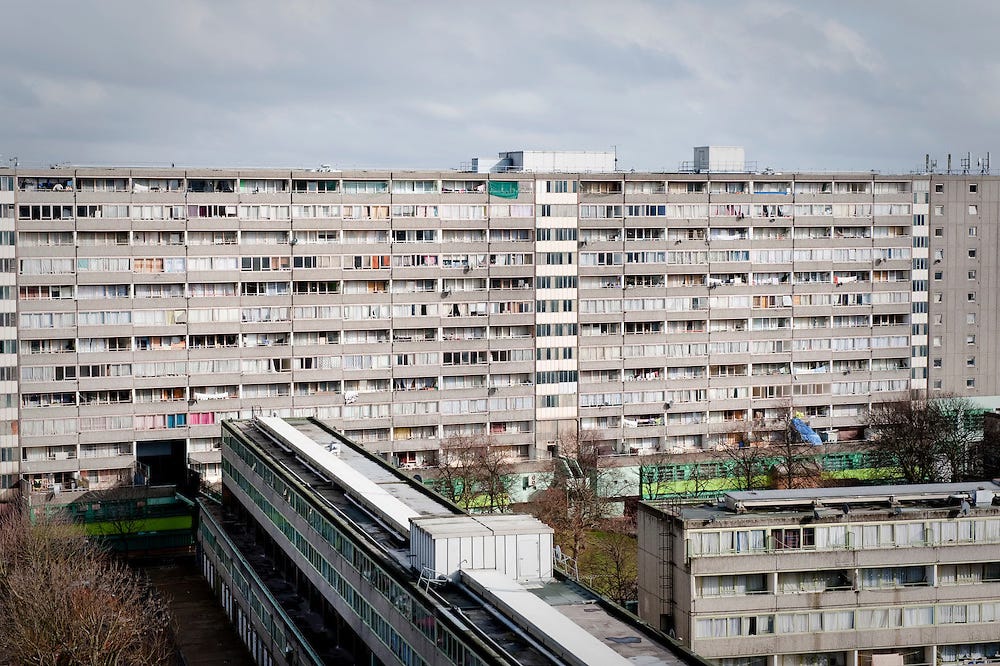
In other housing developments across this city there are literally separate communal entrances for poor, social housing, residents and their wealthier, better educated counterparts who own their homes in the very same buildings. Could you imagine if such separate entrances were created for whites and coloureds, or straight and gay? Try to imagine the monumental shitstorm which would rightly descend upon those forms of intolerant social engineering? My point is simple enough, nor is it particularly original: we live in societies which obsess over some forms of discrimination whilst simultaneously and systemically ignoring other forms of mostly class-based inequality and discrimination. Liberal moral outrage is partial and selective. It is almost entirely blind to class.”
Someone in the audience raised their hand. Troy paused and seeking confirmation from the host in the front-row, said “I’m really sorry, but I can’t take questions now. There will be time for questions during the Q&A and I’ll be sure to call on you first. I hope that’s OK?”
He continued. “So, at this point you are probably expecting me to denounce the immorality of poverty and inequality. Others have done so and continue to insist that social rights will provide the remedy we need. They say that we must put in place a framework of legally enforceable protections and guarantees to ensure that the less fortunate amongst us might live in affordable housing, have equitable access to decent healthcare and education. Have an equitable chance at leading a decent life, securing equal respect and recognition as human beings with dignity. Equitable. Equal. Nice words. Well, sorry. I don’t share that optimism. I don’t see social rights as having the power to solve our problems. They’re deeper than that, our problems, that is.”
Some in the audience laughed uncertainly whilst others continued to uneasily await the next turn in Troy’s lecture.
He smiled. “I myself have written, or said somewhere, that the greatest political challenge we face is socio-economic inequality. But, on reflection, I realised that this is wrong and that framing the problem in this way simply perpetuates the spell which the fetish of equality holds over us. Even over so many so-called radicals.”
He paused and gazed around the packed hall.
“Some of you are looking nervous. You may be fearful that I am now going to try and defend some trendy version of illiberal prejudice. The kind that is increasingly out there in social media land. Bear with me. I am not here to try and persuade you that racism, sexism and the like are just misunderstood and deserve another hearing. Of course not. Rather, my core point and the one I would hope you take away with you, whether you agree with me or not, is that the fundamental challenge we face is not socio-economic inequality, but something else of a far greater magnitude. The challenge we face is the impossibility of securing genuine equality as a direct consequence of something we are all part of and are dependent upon: an hierarchical division of labour.”
Troy looked around the audience, some of whom appeared confused.
“Sorry. I need to be clearer. We live in divided societies. This we know. But the division which dare not speak its name is class, or, more bluntly still, that the very infrastructure of our liberal order depends upon a series of sorting mechanisms which consign millions of people to what one may colloquially refer to as shit-city, or shit-land. Millions of people live in shit neighbourhoods, lead shit lives, are the victims of shit education, do shit jobs, if they do any jobs at all. Others, like I assume the vast majority of this audience here this evening do, lead better lives, have benefitted from good education, live in safer, more gentrified surroundings, are engaged in being the best versions of themselves that they can be. Most of us, most of you, don’t spend much time in shit-land. Do you?”
A lone voice in the audience shouted out, “speak for yourself”, as the rest of the gathering remained silent.
Troy smiled and took another sip of water.
“Again. We know this. You know this. There is nothing original in pointing out such facets of our society. So, here comes my twist. We routinely think of these deprived, shit conditions as an aberration, a dysfunction, a preventable side-effect of our liberal order. We shake our heads and lament such embarrassing social facts and, some of us at least, ask what can be done to solve this problem, by ensuring that everyone is genuinely afforded an equal opportunity to lead a good life, to aspire to be the best versions of themselves. To realise the liberal meritocratic dream. This is what so-called radicalism in our age has largely been reduced to because of a continuing idolisation of a false fetish, the continuing power of an unattainable ideal: equality.”
Someone in the front row raised their hand abruptly. Troy smiled and reminded the entire audience that there would be time for questions.
“Some of you look sceptical. Of course. Why wouldn’t you be. Look. To better illustrate my claim, I’ll evoke the theme of John Lennon’s iconic ode to utopian nonsense, Imagine. Bear with me. Imagine, if you will, that no one had to spend their lives doing the essential, but typically poorly paid and socially denigrated jobs, which us, so-called, better people, will not do. Imagine all children received the same quality of education, that no one could buy educational advantage, as so many do. Imagine, if you will, that neighbourhoods were genuinely socially mixed, that there was no gentrification. There were no actual or metaphorical separate entrances for poor and middle-class people. That no one would be ignored or denigrated because of how they spoke, or how they dressed. Imagine, and here I risk biting the hand that feeds me this evening, that universities fundamentally existed to develop a faculty for critical thinking amongst as wide a section of society as possible, rather than serving, as so many do, as sorting houses, finishing schools for being middle-class?
The simple and brutally stark truth is that we cannot all be middle-class, not because of our individual failings, but because we live in societies in which being middle-class is only possible because of the systemic existence of our largely unacknowledged other. Equality may exist as a formal legal status and title, but the equality which really makes the greatest difference: social and economic equality must be attained, must be striven for, sought after. A state, a condition which is available only to some and not to all. Those who fail to achieve it are either condemned, dismissed, treated as little more than fodder for others’ ends, or are sympathetically labelled as the less fortunate, the left-behind. All civilisations depend upon some form of under-class, including ours. This shouldn’t be celebrated or simply accepted as unavoidable, but it should at least be recognised and acknowledged as an essential component of our so-called liberal order.”
Applause rippled uncertainly around the audience.
“You’ll be pleased to know that I’m coming to the end of my…lecture. As I warned you earlier, I have relied too much on a collection of claims which require far more careful construction. I hope you will accept that that kind of labour is not well-suited to the format of this kind of event. I’ve been overly rhetorical. Sorry. My book will provide some of you with the kind of level of detail you deserve.
I did want to reiterate, however, how all of this relates to the ongoing disaster movie that is liberalism. Put too simply, perhaps, our societies, liberal society, contain many unstated norms, of maleness, whiteness, heteronormativity etc.., but they also fundamentally rest upon an unstated norm of middle-classness, of being college-educated, of working in so-called white-collar, professional occupations, of owning one’s own home, having a private pension and such like. Not having to live in shit-land, amongst so-called common people.
The attainment of equality, liberalism’s lodestone, is invariably construed as being or aspiring to become middle-class which necessarily implies that those who haven’t managed to secure this status have in some sense, failed, are failures, have been left-behind and all of those other terms we have invented to other this vast constituency of people, upon whom we depend. The meritocratic dream which liberalism necessarily peddles can only be attained by some. The rest have been largely ignored, taken for granted. Or at least they were, right up until some of them went out and voted for Trump, for Brexit and all of those other phoney brands of populism. To the extent that these votes have made a difference, they should be understood as tragic symptoms of a deeper disease. Instead, we, that is most liberals, construe them as the main cause of liberalism’s crisis. The reason why liberalism is in such trouble, they insist, is ultimately down to stupid, illiberal people becoming politically engaged in all of the wrong ways. I hope to have at the very least caused some of you to rethink this kind of disastrous, prevailing wisdom.”
Troy moved back to the lectern he had strayed from at the outset of his lecture. He smiled again at the audience and said simply, “Thank you for listening.”
There was a moment’s silence, before pockets of people amongst the audience cheered and others applauded politely.
The host made his way back up onto the stage and stood uncomfortably beside Troy, who had once again moved away from the lectern. The host smiled politely at Troy.
“Gosh. OK. Well. You’ve given us plenty to consider and to think about. Thank you. I have many questions of my own, but I’m sure our audience would like to hear more and will have questions for you.”
Troy pointed towards an elderly West Indian man, who was dressed in a grey three-piece tweed suit.
“This person had a question earlier. I promised to call upon him first.”
The besuited man rose awkwardly from his chair and smiled at Troy.
“You’re a communist, then. You believe in a future society in which no one does only one job, but we all work together, collaborate. Fish in the morning, rear cattle in the afternoon and philosophize in the evening, to paraphrase Marx.”
Troy laughed. “Thank you for what I think is a question, rather than an accusation. God no. I’m not that optimistic. In fact, I’m not optimistic at all. I can see no path that leads to a just order from where we are now. Our economies are far too complex to ever allow for some kind of global hippy commune. That’s total nonsense. I am, I suppose, calling for a version of what the philosopher Nietzsche, you know the one who went mad, called for.”
The elderly, besuited man, who was still standing, asked, “which is what? He called for many things, some of which were really very unpleasant.”
“A good question and yes, Nietzsche was a complex thinker. What I’m calling for is a revaluation of our attitudes towards the division of labour. Nietzsche called for a conceptual revolution of our moral beliefs, which he saw as hopelessly indebted to Judeo-Christian hypocrisy.
I suppose, and I don’t for a moment expect this to happen anytime soon, that I’m advocating for a revolutionary change to how we think about work and value. Our order ignores, takes for granted or vilifies vast swathes of fellow citizens and human beings because of what they do to pay the bills. Many of these people do essential work, which, whilst poorly paid and looked down upon by the better educated, all of us are dependent upon. Plumbers, lorry drivers, supermarket workers, social care staff, car mechanics are far more important to the functioning of our society than, let’s face it, people like me, or like many of you. No offence. We only see the truth of this in times of real emergency. Let’s hope it won’t take a national emergency, a pandemic, say, for us to recognise this fact.” Troy nodded in response to applause from across the lecture hall.
The host looked out at the audience in search of another question. Amelia rose from her seat and raised her hand. Seeing her, Troy smiled, as the host invited her to ask her question.
“It’s good to see you again.” Troy said.
Amelia involuntarily frowned as the host stared inquisitively at Troy. She felt unusually self-conscious as the audience turned its attention towards her.
Amelia nodded. “And you. Thank you for your lecture. So, my question. Look I agree that Hillary Clinton’s comments about the deplorable were misguided and counter-productive, but the deplorable do exist, nevertheless. She wasn’t making it up. She wasn’t wrong in describing some, many Trump supporters as being sexist, racist, homophobic etc. There is real nastiness and hatred out there. In shit-land, as you call it. Your analysis seems to ignore this. Your proposed revaluation of our beliefs and attitudes amount to little more than say hugging a hoodie, being willing to debate a homophobe, or a racist. Have I got you right? If so, it’s not for me. We have to maintain our redlines. We cannot tolerate the intolerant.” Several people in the audience applauded as Amelia sat back down.
Troy smiled. “I am not sentimental. I know that prejudice and intolerance are widespread in our societies. There is a great deal of nastiness out there, for sure. I agree with you that we cannot simply ignore this or forgive it. So, I’m not suggesting that we, as you say, hug a hoodie. However, it is simply factually wrong to imagine that only poorly educated white people are guilty of such forms of prejudice. Or even that the comments which such people undoubtedly make on social media are the only, or the most damaging, forms of prejudice out there. I know lots of well-educated, professional people who are, in effect, just as prejudiced as their so-called white trash counterparts. They just do a better job of hiding it, or let’s be frank, there are fewer opportunities for the expression of such forms of hate. Migration, for example, manifestly poses a threat to the wages and working conditions of many poor people. Being for higher levels of migration is easy when it poses no threat to your pay and job…”
Amelia rose from her seat and said, “so all values have an economic basis then, a price?”
“Is that a question?” Troy asked.
“Yes, I suppose it is” Amelia replied.
“They may do, yes. I don’t know ultimately if they do. My point is that liberal values don’t exist in a socio-economic vacuum. Turning every social and political challenge into a moral register, a moral perspective reinforces a false view of human agency. It ignores the necessities, the different necessities that we have to deal with. This fact cannot be denied any longer.” Troy calmly said, before continuing, “you know, the more important point I want to reiterate is that the deplorable, the so-called deplorable, are reacting to conditions not of their making. We are all part of this disaster movie. We all have a role to play in producing all of this nastiness, as you call it. Simply rhetorically espousing one’s support for liberal norms is not enough to cleanse our hands.”
Amelia sat back down, deeply dissatisfied with the response to her question. One of the besuited senior people in the front row stood up abruptly.
“So, as I understand you, you’re arguing that we are all to blame. We are all responsible. Pointing the finger at the deplorable, the undeserving poor as they used to be known, is just scapegoating.”
Troy laughed. “Yes. That is exactly what I’m saying, although with one important caveat. It’s not really a question of being responsible. Responsibility entails agency, being able to choose otherwise. We do not have that degree of agency. Regardless of which entrance one enters the residential block through, whether you live in shit-land or a gentrified ghetto, we are all integrally embedded in this system. We’re all in the same disaster movie. It’s not comfortable and many of you will disagree. We, you, want to feel affirmed, morally validated, told that you’re the good guys, on the side of the angels and all that, but that’s mass self-delusion. Scapegoating others helps to reinforce that self-delusion.”
No one applauded and the host scanned the hall looking for other questions. A statuesque woman who Amelia recognised as a recently promoted anthropology professor raised her hand.
“Thank you for your lecture. Very thought-provoking. My question is more concerned with you. How do you understand yourself? What are you trying to achieve? Forgive me for saying this, but you come across as something of an enigma. You are an intellectual who appears to be critiquing intellectuals. An anti-intellectual, intellectual, even.”
Troy gazed down at the woman who had not risen from her seat.
“What a good question. How do I see myself? What am I trying to achieve? Am I an enigma?” Troy paused.
“That’s the nicest thing anyone has called me in a while.” Many in the audience laughed.
“Ultimately, I have bills to pay. I have to earn a living and there aren’t many things that I’m any good at. Other people seem to think that I’m OK at doing what I’m doing now, so here I am. Beyond that, I suppose I’m trying to develop a way of understanding our world in ways which don’t just reproduce comfortable conventions. I don’t want to fool myself or try to fool anyone else. As for intellectuals and radicals. Blimey. As I said earlier, we are massively over-rated and over-valued by people who need to invest in such things. I try to remind myself of that, of my own insignificance, as much as possible. As for radicals. Once upon a time, radicals risked losing their lives by fighting fascists in Spain, or riding freedom buses with African Americans into the Deep South. Now, a radical is someone who drives a hybrid car or visits an organic farmer’s market once a month. It would be funny if it wasn’t so tragic. So, I s’ppose I’m trying to avoid that kind of self-deception. That kind of nonsense. Nothing more grandiose than that, really. Not believing the hype, to coin a phrase.”
Adam had sat attentively following the lecture and these exchanges. He hadn’t been familiar with all of the terms used, but he was confident that he understood Troy’s core message. Adam had been wrestling with himself since Amelia had asked her question. He had also wanted to raise a question, one which was deeply troubling for him. As he tried to formulate the words, his pulse increased, and his palms became sticky with sweat. On the stage, the host was looking for another, perhaps the final question from the audience. Adam saw the host turn towards Troy, perhaps to either ask his own question, or to formally close the event. Adam rose abruptly from his uncomfortable seat and shouted out, “I’m really sorry, but I think I have a question, please?”
Troy, the host and much of the audience turned to look at Adam. Troy shrugged his shoulders and said to the host, “time for one more?”
“Yes, of course.” The host confirmed and turned towards Adam, who he recognised from Dr Roberts’ hearing.
“A final question from the young man in the red…top. The red hoodie.” The host said.
Troy smiled at Adam and said, “fire away, my friend. What’s your question?”
Adam paused and looked around him. He noticed Amelia staring uncertainly at him, as he tried to rehearse his words again before exposing himself to this crowd.
“Yeah, my question. So, thank you for your lecture, Dr Essian…”
Troy interrupted, “Please call me Troy. I didn’t catch your name.”
“Troy. Yeah. OK. I’m Adam. I’m a first-year undergraduate student here.” Adam replied, trying to hide the tremor in his voice.
“Good for you, Adam.” Troy said.
“Thank you. Yeah, so my question. I’ve been trying to phrase it more…professionally, but I’m struggling to do that. It doesn’t feel like it’s my words, when I try to phrase it that way.”
“OK. In your own words, then, Adam.” Troy said.
“My own words. Yeah, so I live, have always lived in what you call shit-town.” Some in the audience laughed uncomfortably.
“Just down the road in Deptford, in fact. No one in my family has ever gone to university and hardly anyone in my wider circle, my neighbourhood has been able to go to university. I’ve worked really ‘ard to get ‘ere. Lots of people are proud that I ‘ave gotten ‘ere. But you seem to be saying that people like me shouldn’t come ‘ere. That we shouldn’t try and leave shit-town, or shit-land. You seem to be saying that people like the people I grew up with, the people I live with should carry on doing what we do, but that other people, people who have gone to university, should think differently about people like us. They should stop looking down their noses at us. Is that right, or ‘ave I misunderstood you?” Adam sat back down. Two rows ahead of Adam, Amelia smiled.
Troy gazed back at Adam and said nothing for several extended seconds.
“Wow. Adam. You obviously should be here. What an insightful and crucial question.” Troy looked towards his host, who nodded in agreement.
Troy continued. “So, I can see how you might interpret me in the way you have. That’s on me. I should be clearer. Thank you for that. I am not saying that you shouldn’t be here. I’m not saying that people who live in shit land shouldn’t seek an education, to gain a better, more complicated understanding of life, of what it means to be a human being. I’m not saying that…”
The elderly, tweed-suited West Indian man interrupted and said, “so what are you saying?”
Troy smiled and nodded towards his inquisitor.
“What I am saying is that the supporters of the myth of liberal equality will hold you up as a role model, as proof that hard-working, intelligent people can succeed regardless of their background and thereby imply that those who remain in shit land have only themselves to blame. Your success will be turned towards the end of perpetuating the very hierarchies which make your efforts so much harder than many of your peers.” Some in the audience applauded.
“I’m not saying that you shouldn’t carry on with your journey. But I am saying, sorry, that your success will not help begin to address the core challenge we all face…”
Adam rose from his seat and said, “so, I’m just moving from one lifeboat to a different lifeboat on the sinking ship?”
Troy smiled. “Yes. Exactly. Or even worse, you may manage to get a place in a lifeboat whilst those you grew up and quite possibly love, are abandoned, with no hope. That might be what you want. You may be motivated only to get a better job, a better home, to get out of Deptford and move to, I don’t know, Greenwich, but something tells me that you’re not like that.”
Troy held up his hands. “I’ve only just met you, Adam, but something tells me that you’re better than that. I don’t want to discourage you, from whatever your project is, from getting to where you want to go, but I’d say keep on questioning everything. Keep on doing what you’ve just done now, which takes courage.” Much of the audience applauded, as many turned to gaze at Adam again.
Still standing, Adam said, “yeah. Thank you. I will.”
As Adam sat back down, the host brought the event to a close, by thanking Troy, his senior management colleagues, and the entire audience. He then reminded the audience that a drinks’ reception had been organised, which was being set up in the foyer.
*
Did you like it? Did you hate it? Do you agree or disagree with Troy? Are any of you “Adam”?
By the way, this isn’t the post I promised on authoritarian nationalism in the US administration. That’s coming. I promise. But, my next posting is going to tackle what might very possibly be the dominant, if not defining, trait of our current age: cynicism.